

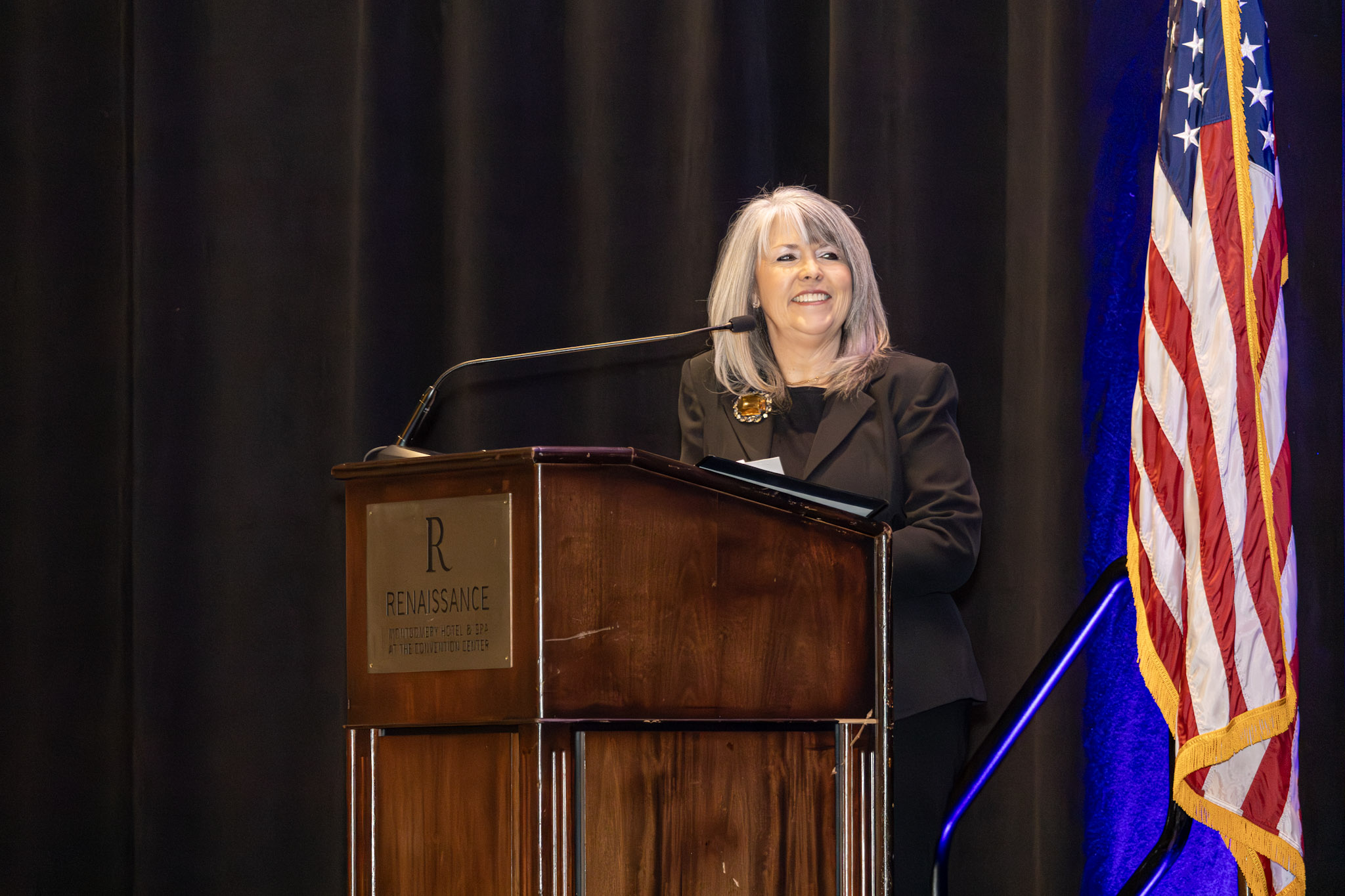
MONTGOMERY, Ala.— Teenagers in blue scrubs, fire-resistant clothing, steel-toed boots, and lab coats are stepping into promising futures at a younger age than past generations. They’re earning technical credentials as early as their sophomore year of high school and have become part of Alabama’s growing dual enrollment pipeline.
This is the talent pool economic developers recently praised at the Economic Development Association of Alabama Winter Conference. As the state unites to boost its workforce, many foresee innovative ideas that bring K-12 students and industry leaders together as key to reshaping the long-term growth of advanced manufacturing and technical careers.
“We select students from multiple counties,” said CREATE Director Lorie Denton. “Students are in different service areas within the community college system, so we have partnerships [and budding projects] with Gadsden State, Central Alabama, Snead State, and Jefferson State community colleges.”
Developers have been paying close attention to the impact of dual enrollment success, even as far south as Baldwin Preparatory Academy in Loxley and CREATE—a regional workforce center in Oxford. Panel members during Wednesday’s session highlighted that CTE models like these are attracting students to community college campuses.
Dual enrollment allows students to gain credits toward their diploma and associate degree at the same time, and starting college early helps students transition out of high school with more ease.
“Our biggest thing was getting our school systems on board to help them understand that there really is no cost,” said Denton. “We knew that if there was hesitation there or if the schools felt like they were going to have to give up something, they would not make it readily available for their students to attend.”
Economic developers say when K-12 systems adopt CTE programming in their schools, the window of opportunity widens to help students reach the next level.
“At ACCS, our community colleges are preparing the workforce of the future, and dual enrollment is one of the most effective tools we have to connect high school CTE programming with college credentials and career pathways,” said ACCS Chief Economic Development Officer Melody Whitten. “Economic developers serve as conveners in that process, aligning education and industry around workforce demand. Today’s examples showed how innovative partnerships between economic development agencies and our colleges are turning that alignment into impactful CTE facilities and programs.”
In Baldwin County, those needs are already being met.
“563 students are participating in dual enrollment in their career tech and academic pathways,” said Baldwin Prep Industry Engagement Director Christina Hellmich. “They are a huge, huge part of our school.”
Urban and rural communities across Alabama face different challenges, and some have more resources than others. Regardless of city population, similar dual enrollment success in any community begins with forging meaningful relationships with industry partners.
“We’ve got to keep making that connection so that eventually that light goes off and the teacher says, ‘oh, that’s why I teach this!’ or ‘that’s how I can show our kids that this means something,’” said Calhoun County Economic Development Council Director Don Hopper.
A strong talent pool requires a strong foundation for the student, the eventual future employee to succeed in any field.